 Amaeru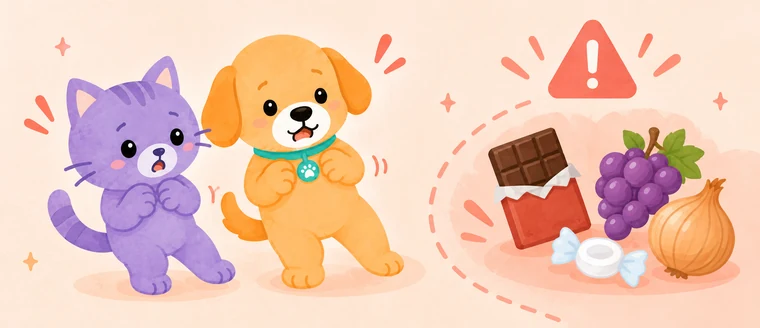
Open contents
The important points, first
- Keep the package, ingredients, possible amount and time of ingestion.
- Chocolate, xylitol, grapes and raisins require prompt assessment in dogs.
- Onions, garlic and chives can damage red blood cells: cats are more susceptible, but dogs are also at risk.
- Do not induce vomiting or give home remedies unless a veterinary professional instructs you.
Why the product, dose and animal change the risk
The Merck Veterinary Manual describes different syndromes for chocolate, xylitol, grapes and raisins, macadamia nuts and unbaked yeast dough. The darker the chocolate or the higher its cocoa content, the more theobromine and caffeine it contains; the effect of grapes and raisins varies because their tartaric acid content is not constant; xylitol can cause a rapid fall in blood glucose in dogs and liver injury at higher doses.
Do not use a threshold found online to rule out risk. The veterinarian needs the animal’s weight, exact product, ingredients, maximum possible amount and time since exposure.12
Foods that need particular attention
Recurring exposures include chocolate and cocoa, coffee and caffeinated products, sugar-free products containing xylitol, grapes and raisins, alcohol and raw yeast dough. Illness after eating macadamia nuts has so far been reported only in dogs. Onion, garlic and chives belong to the Allium genus: they can irritate the digestive tract and damage red blood cells, leading to anaemia, and cats are more susceptible than dogs.
Always read the ingredient list: xylitol is found in chewing gum, sweets, peanut and other nut butters, baked goods and other sugar-free foods. Leftovers and packaging within a pet’s reach are also common sources of exposure.12
What to report and how to prevent exposure
Move the pet away from the product and keep the package or a photograph of the label. Report species, weight, product, ingredients, possible amount, time and observed signs. Do not induce vomiting or use home remedies without instructions: with xylitol, for example, home attempts are not recommended because blood glucose can fall within minutes, and activated charcoal does not help. Whether and how to intervene is the veterinarian’s decision.
Store food in closed containers, clear plates after meals, tell guests and children, and check bags, bins and gift parcels. Check every sugar-free product for xylitol.12
Sources and checks
Numbers in the text lead to the exact source. Commercial blogs and social posts are not used as evidence.
- 1Peer-reviewed veterinary manual
Food Hazards — Special Pet Topics
Merck Veterinary Manual · Risks, signs and veterinary management for chocolate, xylitol, grapes, raisins and other food exposures.
Link checked on 15 Sept 2026 - 2Institutional poison control centre
People Foods to Avoid Feeding Your Pets
ASPCA Animal Poison Control Center · Institutional overview of major food exposures that can harm dogs and cats.
Link checked on 15 Sept 2026
This guide cannot assess an individual ingestion. After an actual or possible exposure, contact a veterinarian immediately.