 Amaeru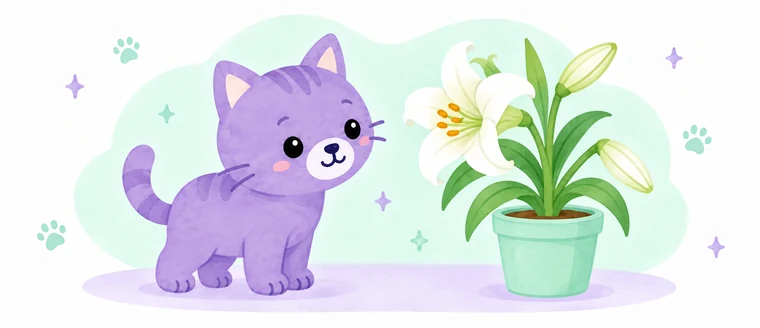
Open contents
The important points, first
- Keep the botanical name or a clear photograph of the plant.
- With true lilies, pollen and vase water can also expose a cat.
- After a possible ingestion, call a veterinarian immediately rather than waiting for symptoms.
- Do not induce vomiting unless a veterinary professional tells you to.
Why lilies need special attention
Cornell University lists lilies in the Lilium and Hemerocallis genera as highly toxic to cats. Potted plants and cut flowers can be involved, including leaves, petals, pollen and vase water. A clinical review in Topics in Companion Animal Medicine describes the cat’s marked sensitivity: deaths have been reported after as little as two leaves or part of a single flower, and the outlook is much better when treatment starts before the kidneys stop producing urine.
“Lily” is also a common name applied to different plants: lily of the valley (Convallaria), for example, spares the kidneys but contains compounds that act on the heart. Correct risk assessment requires the scientific name; a photograph can help, but it should not delay professional advice after an exposure.15
Other plants to check at home and outdoors
The ASPCA database separates toxic and non-toxic plants for cats and, where available, provides the scientific name, botanical family, toxic principle and clinical signs. Checking the individual plant entry is safer than relying on generic lists or social posts.
Oleander, cyclamen, Dieffenbachia, philodendron, azalea, tulips and many other species are listed as toxic to cats and can cause different clinical problems. Poinsettia is often described too dramatically: the ASPCA entry calls its toxicity generally over-rated, because the irritant sap mainly irritates the mouth and stomach and sometimes causes vomiting. “Toxic” therefore does not always mean “fatal”; management depends on the plant and exposure.34
What to do after a possible exposure
Prevent further access and collect useful details: name, photograph, plant part, approximate time and possible amount. Contact your veterinarian or an emergency clinic immediately, especially when the plant is unknown or could be a lily.
Do not wait for symptoms or use home remedies. Cornell advises against inducing vomiting unless specifically directed, because some substances can cause additional damage and management depends on the toxin.21
How to reduce the risk
Before buying a plant, search its botanical name in the ASPCA database. Keep high-risk species out of the home, check bouquets and floral arrangements, and inform family members and visitors. If a plant cannot be identified, treat it as potentially unsafe until verified.3
Sources and checks
Numbers in the text lead to the exact source. Commercial blogs and social posts are not used as evidence.
- 1University veterinary centre
Small Animal Toxins
Cornell University College of Veterinary Medicine · Identifies Lilium and Hemerocallis, including plant parts, pollen and vase water, as highly toxic to cats.
Link checked on 15 Sept 2026 - 2University veterinary centre
Common Cat Hazards
Cornell Feline Health Center · Guidance on hazardous plants, general warning signs and immediate response to possible poisoning.
Link checked on 15 Sept 2026 - 3Institutional poison control centre
Toxic and Non-Toxic Plant List — Cats
ASPCA Animal Poison Control Center · Searchable database using common and scientific names with individual plant entries.
Link checked on 15 Sept 2026 - 4Institutional poison control centre
Poinsettia
ASPCA Animal Poison Control Center · Poinsettia entry: irritant sap, mouth and stomach irritation, toxicity generally over-rated.
Link checked on 15 Sept 2026 - 5Peer-reviewed research article
Lily toxicity in the cat
Topics in Companion Animal Medicine (2010) · PubMed PMID 21147474 · Clinical review: Lilium and Hemerocallis nephrotoxicity, feline sensitivity, confusion with other plants called “lily”, better prognosis with early treatment.
Link checked on 15 Sept 2026
This guide provides general information and cannot replace veterinary assessment. For an actual or suspected exposure, contact a veterinary professional immediately.